Choosing your wedding dress is one of the most exciting parts of planning a wedding, but the time of year can make a surprisingly big difference to what feels comfortable and looks right on the day.
A gown that works beautifully for a summer ceremony may not be the best choice for a winter wedding, while fabrics, sleeves, necklines and even the shape of the dress can all feel different depending on the season.
If you’re beginning your search, experienced bridal stores such as Bernice Fashions Geelong can help you explore different styles and find a wedding dress that suits your wedding, your body shape and the time of year.
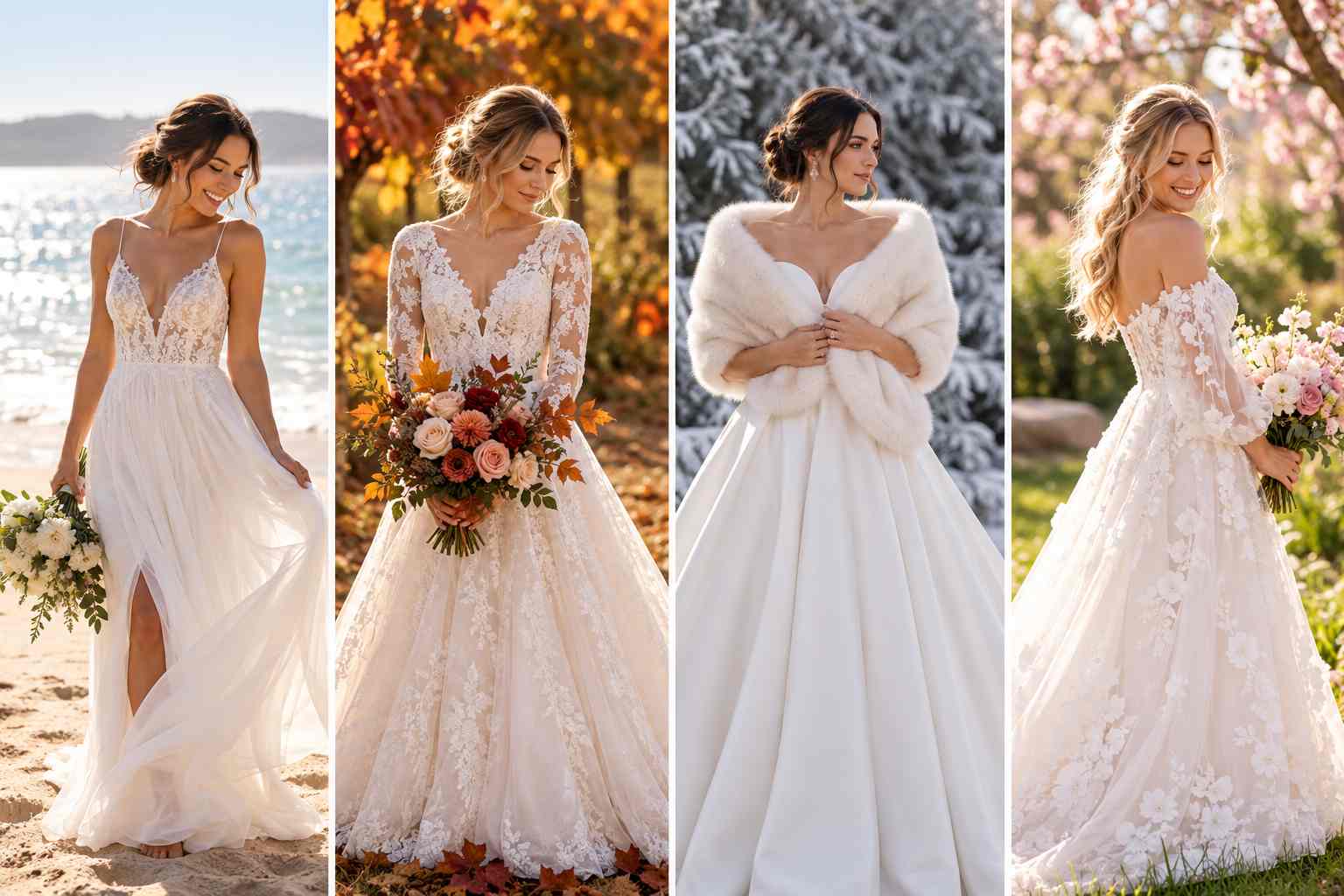
Summer Wedding Dresses
Australian summer weddings can be hot, particularly when the ceremony or photography takes place outdoors. Comfort should therefore be an important consideration when choosing your gown.
Lightweight fabrics such as chiffon, tulle and lighter types of lace can work beautifully during the warmer months. Dresses with less structure or fewer heavy layers can also make it easier to stay comfortable throughout a long wedding day.
Strapless, sleeveless and off-the-shoulder gowns are popular choices, but don’t feel that a summer wedding means you have to avoid sleeves altogether. Delicate lace or sheer sleeves can provide coverage without making the gown feel excessively heavy.
For an outdoor wedding, also think about how easily you can move in the dress. A very long train can look spectacular, but it may require a little more planning if you’ll be walking across grass, sand or uneven ground.
Autumn Wedding Dresses
Autumn offers plenty of flexibility when it comes to bridal fashion. The weather is generally milder, allowing brides to consider both lightweight gowns and dresses made from more structured fabrics.
This can be a wonderful season for lace. Full lace gowns, lace bodices and detailed sleeves can add texture without necessarily feeling too heavy.
Autumn is also well suited to romantic silhouettes such as A-line and fit-and-flare gowns. Depending on the venue and expected temperature, you might consider three-quarter sleeves, illusion sleeves or a removable bridal jacket.
Because temperatures can drop quickly later in the day, particularly for an evening reception, it’s worth thinking beyond the ceremony when choosing your dress.
Winter Wedding Dresses
Winter gives brides the opportunity to embrace fabrics and designs that may feel too warm during summer.
Long sleeves, heavier lace, satin and more structured gowns can all be excellent choices. A winter wedding can also suit dramatic details such as higher necklines, fuller skirts and elegant trains.
However, warmth doesn’t necessarily mean covering yourself from head to toe. A sleeveless or strapless gown can still work beautifully for a winter wedding, particularly when most of the celebration is indoors.
A wrap, cape, bolero or jacket can provide extra warmth for outdoor photographs while allowing you to keep the original look of your gown during the ceremony and reception.
Spring Wedding Dresses
Spring weddings often combine warmer days with cooler mornings and evenings, so versatility can be useful.
Light lace, soft tulle and flowing skirts are all well suited to the season. Floral lace and delicate botanical detailing can also complement the natural feel of a spring wedding without requiring the gown itself to be overly elaborate.
A-line gowns are particularly versatile because they work with many different wedding settings, from traditional church ceremonies to gardens, vineyards and modern venues.
Removable sleeves, detachable overskirts and other adaptable features can also be worth considering when the weather is unpredictable.
Consider Your Venue as Well as the Season
The season is important, but it shouldn’t be considered in isolation.
A January wedding in an air-conditioned ballroom is very different from a January ceremony on the beach. Likewise, a winter wedding held entirely indoors gives you considerably more freedom than a ceremony and reception held outdoors.
Think about where you’ll spend most of the day, how far you’ll need to walk and where your photographs will be taken.
The practical details don’t have to dictate your choice, but considering them early can prevent you from falling in love with a dress that becomes difficult to wear on the day.
Don’t Forget Your Personal Style
Seasonal recommendations are helpful, but they aren’t rules.
Your wedding dress should ultimately feel like your dress.
If you’ve always imagined yourself wearing a long-sleeved lace gown, you don’t necessarily have to abandon that idea because you’re getting married in summer. Similarly, a winter bride can still choose a light, minimalist gown.
An experienced bridal consultant can often suggest small adjustments, accessories or alternative fabrics that allow you to achieve the look you want while remaining comfortable.
Start Shopping Early
Finding the right wedding dress can take time. Once you’ve chosen a gown, alterations and fittings may also be required before the wedding.
Starting early gives you the opportunity to try different silhouettes rather than feeling pressured to make a quick decision.
Bring an open mind to your appointments. A dress that looks perfect online may not be the one you ultimately choose, while a style you hadn’t considered may look completely different once you try it on.
Finding the Right Dress for Your Wedding
The best wedding dress isn’t simply the one that suits summer, autumn, winter or spring. It’s the gown that brings together your personal style, your wedding venue, the season and, most importantly, how you feel when you’re wearing it.
Consider the weather and practical details, but don’t allow them to overwhelm the experience.
Try different styles, move around in them, sit down, look at the dress from different angles and take your time. When the right elements come together, you’ll have a wedding dress that not only looks beautiful but feels comfortable enough to enjoy from the ceremony through to the final dance.